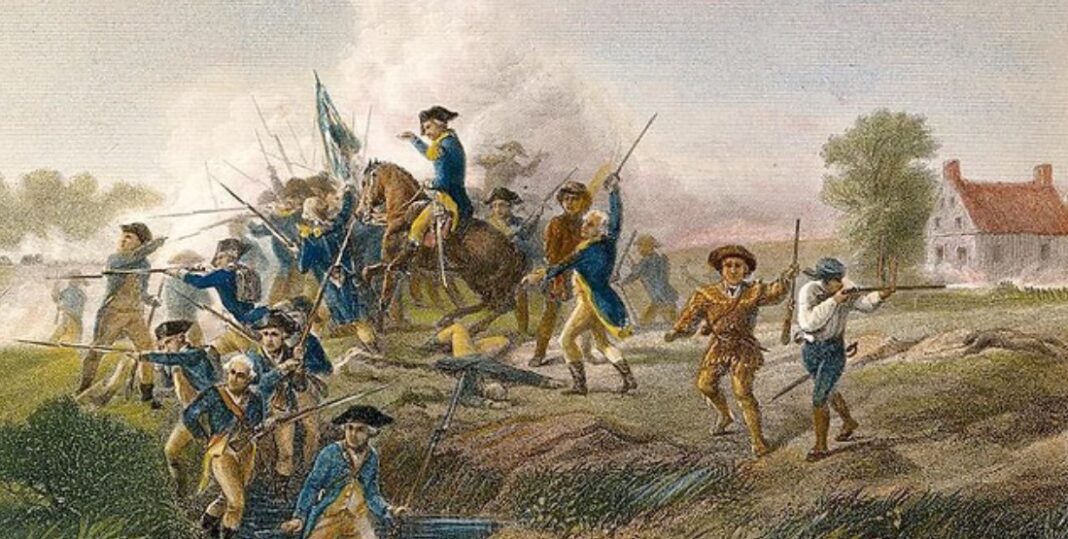

The Battle of Brooklyn is considered one of the largest battles of the American Revolutionary War. The Continental Army was commanded by George Washington, while the British were led by General William Howe. The odds were not in the Americans’ favor; against their 10,000 soldiers, the British fielded twice that number. Read more about this pivotal battle for the independence of the United States of America at brooklyn-yes.
Setting the Stage
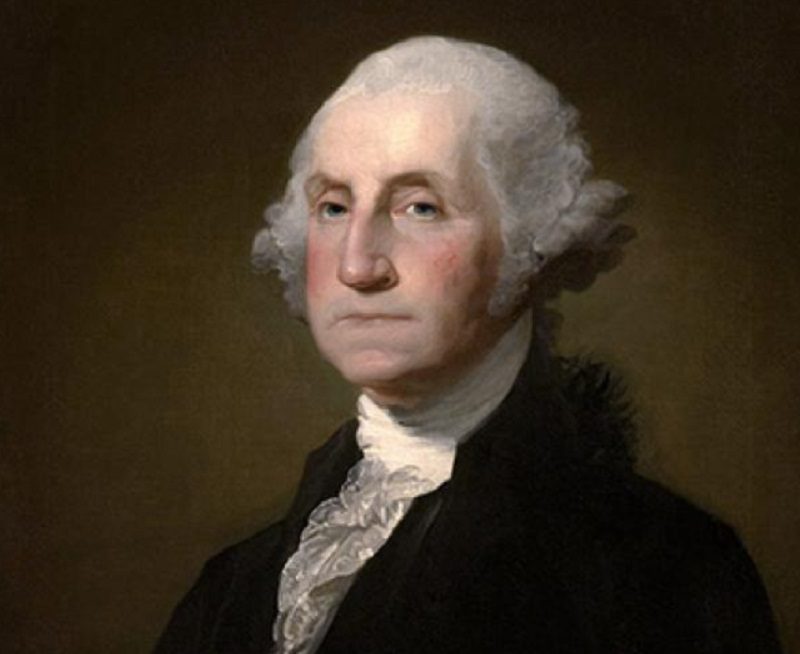
New York City played a pivotal role during the American Revolution, especially in its early stages. Its central location among the American colonies and its major port made the city vital for trade and strategically crucial. After forcing the British to evacuate Boston and flee to Nova Scotia in early 1776, General George Washington correctly predicted that the Redcoats’ next target would be New York. In April and May, Washington moved his Continental Army to the city, hoping to at least seriously blunt the British offensive.
Despite the overwhelming power of British warships, which dominated the waterways cutting through New York and made American defenses vulnerable, Washington was determined to make a stand. He hoped to inflict some damage on the British before potentially abandoning his position. In the end, that is precisely what happened. A timely retreat saved the Continental Army from annihilation in Brooklyn, but the defeat left New York under British occupation for the rest of the war.
The Heroic Stand of the Marylanders
The Battle of Brooklyn began on August 27, 1776. The Americans were positioned in two lines: the first on Gowanus Heights to the south, and the second further north on Brooklyn Heights. Fighting raged along Gowanus Heights all morning. The British infiltrated through the Jamaica Pass and broke through several other American positions, eventually gaining control of the ridge. The bloodiest fighting occurred at Battle Pass, where Hessian mercenaries engaged in hand-to-hand combat with the Patriots.
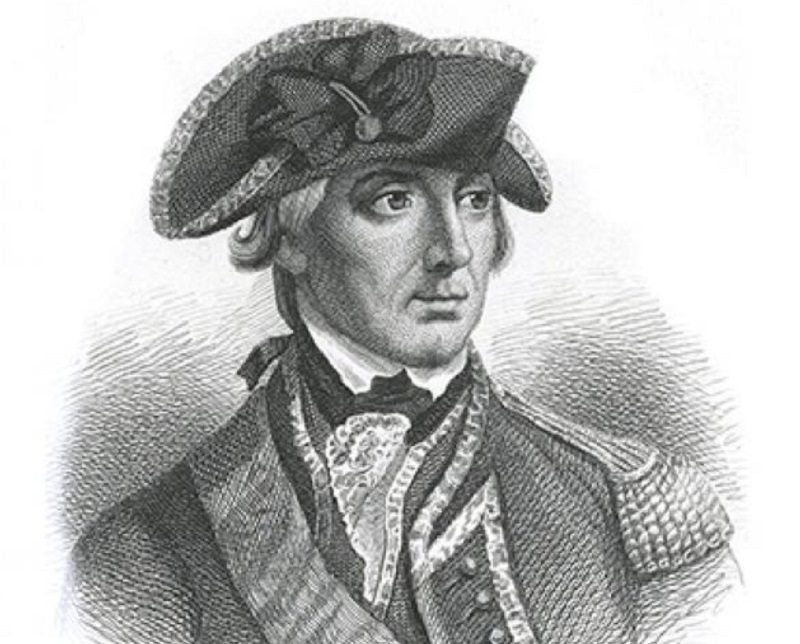
As the Americans began to fall back toward Brooklyn Heights, they were nearly surrounded. Recognizing the dire situation, American General William Alexander, Lord Stirling, led a unit of 400 Maryland soldiers in a charge against 2,000 British infantrymen under the command of General Charles Cornwallis. The forces were clearly mismatched, yet the Marylanders retreated, regrouped, and attacked again. Their losses eventually became too great to continue, and Stirling was forced to surrender. General Cornwallis later remarked that Lord Stirling “fought like a wolf.” In this desperate struggle, over 250 Marylanders were killed, but their sacrifice allowed the rest of the army to escape.
Saving the Army
The American army found itself trapped on Brooklyn Heights, with the East River at its back. The British General, William Howe, ordered his troops to dig in and prepare for a siege against George Washington’s army.
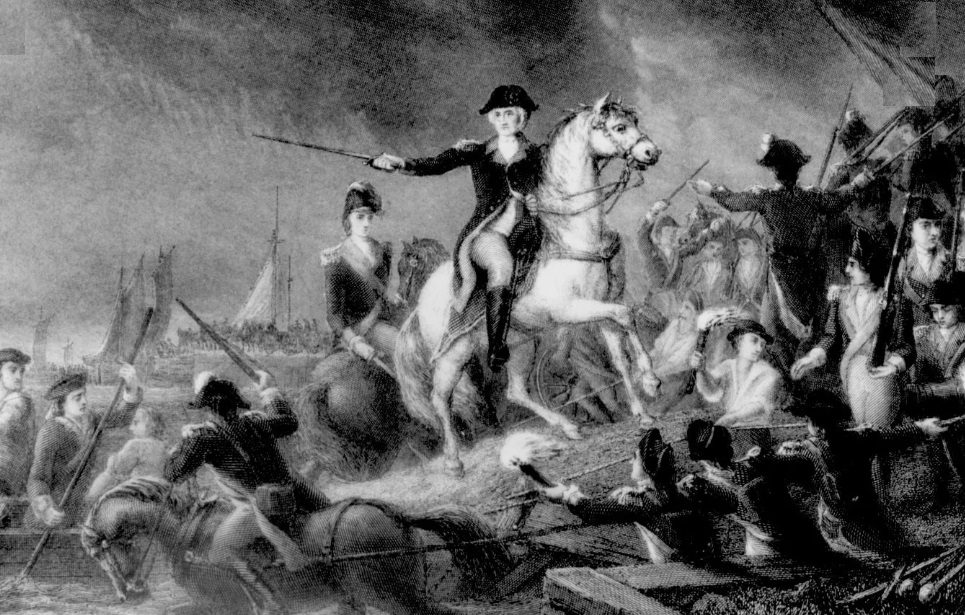
However, Washington was determined to avoid a siege and the resulting certain surrender. Under the cover of darkness, he coordinated a masterful retreat, ferrying his entire army across the river without a single loss of life. When the British advanced on the American positions the next morning, they found them empty.
Despite the tactical defeat, Washington achieved a strategic victory by keeping his army intact. However, many Continental soldiers were imprisoned on British prison ships in New York Harbor, where they were held in horrific conditions. New York was lost, and the British held it until the war’s end. When the United States finally regained control of the city in 1783, the fledgling government wasted no time and immediately began to fortify New York’s harbors.