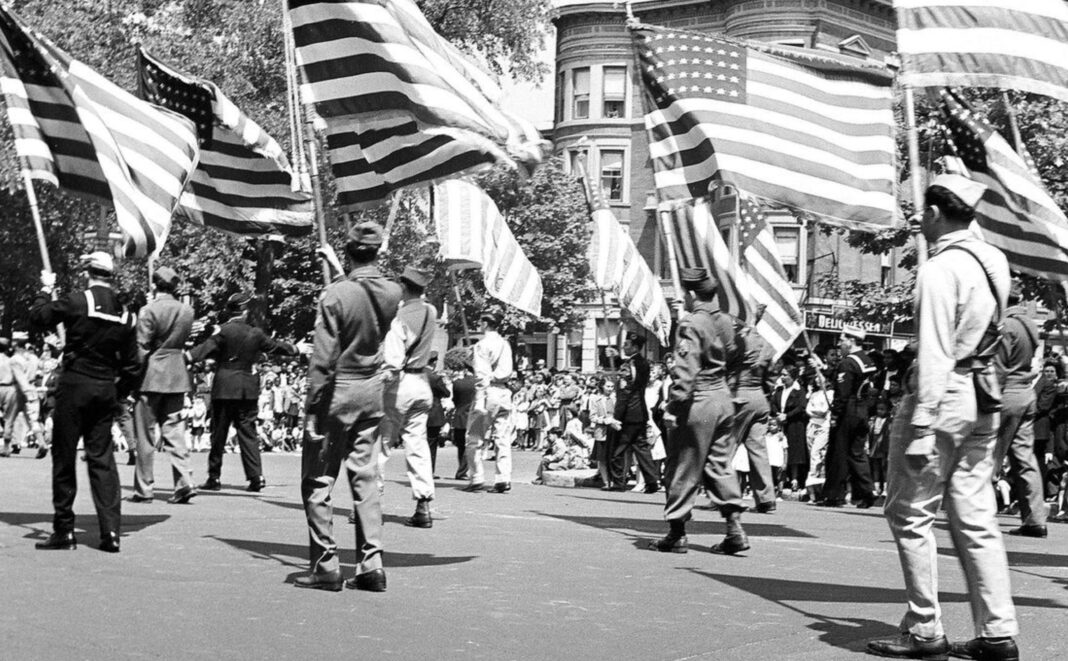

During World War II, Brooklyn played a key role on the home front as a major industrial and military center, with the Brooklyn Navy Yard and Brooklyn Army Terminal spearheading production and logistics. The borough became an important source of military equipment, shipbuilding, and troop support, while at the same time, changes took place in the distribution of the workforce according to gender norms, in particular, women were given new jobs, and Brooklyn’s infrastructure was transformed to meet the needs of the war.
But that’s not the only thing that made the local army terminal famous. For more details about Brooklynites’ efforts to win World War II and the home front during the war, visit brooklyn-yes.com.
History of construction

The Brooklyn Army Terminal was created for war. It became a huge warehouse and port facility for receiving, storing, processing, and shipping military supplies to various locations around the world. However, it is known that not only troops and supplies for combat operations were sent from here. The Army Terminal inadvertently became an important place where people found shelter and received assistance. This applied to those who wanted to escape persecution, war, and other natural disasters.
But first, a few words about the history of its construction. Despite the fact that the terminal was supposed to be used to supply American troops during World War I, its construction was only completed in September 1919. By that time, the war had been over for almost a year. However, the war did not pass without consequences for the world order. It not only led to the destruction of empires, which in turn contributed to a radical redrawing of the map of Europe, but also marked the beginning of many ethnic conflicts, which, unfortunately, lasted for many years.
One such conflict broke out on the remains of the Ottoman Empire, leading to genocide and ethnic cleansing. The Ottoman authorities began the systematic murder and expulsion of Armenians and Assyrians. And when the Greco-Turkish War began in 1919, the crisis escalated even further. The United States could not fail to react to all these processes.
A striking example of this is when, in 1921, 6-year-old movie superstar Jackie Coogan decided to donate his money to charity, namely to clothing and other aid for refugees. In addition, he wanted to use screenings of his films for this good cause, collecting money during them. To this end, in 1924, Jackie traveled around the country for five months, raising Americans’ awareness of the plight of migrants.
What does the Brooklyn Army Terminal have to do with this, you may ask. It’s very simple — all these supplies were collected right here. It is known that in total, more than $1 million worth of aid was delivered to the Mediterranean Sea on several different humanitarian ships, which is about $14.5 million today. Incidentally, Kogan himself, without hesitation, boarded the ocean liner Leviathan and traveled to Paris, London, Rome, and Athens, where he visited an orphanage.
Returning home

The Brooklyn Army Terminal did not lose its importance during World War II. In fact, 3.2 million American soldiers were sent from the New York port of embarkation, which covered all the army port facilities in the region, and approximately 600,000 of them departed from the Brooklyn Army Terminal.
Nearly 5 million then returned home from the war again via New York, making it the largest embarkation and disembarkation point in the United States. The terminal was set up for a grand welcome, with ships greeted by orchestras and huge “Welcome Home” signs.
Of course, not all soldiers returned home alive. And here, the Brooklyn Army Terminal also distinguished itself. It was entrusted with the important duty of receiving the remains of fallen American soldiers. And if World War I was the first foreign conflict in which a large number of dead Americans were repatriated, then during World War II, the American Burial Registration Service was created to identify and repatriate the remains of soldiers.
According to this service, more than 400,000 Americans who died in the war were identified and the remains of approximately 281,000 were preserved. Many people died at sea. In addition, the families of 180,000 of the dead wanted their loved ones’ bodies returned to the United States. Of this total, more than 140,000 were transported through the Brooklyn Army Terminal.
The first ship to transport the dead from Europe was the Joseph W. Connolly. The ship arrived in Brooklyn on October 26, 1947. It had 6,251 dead on board, about a quarter of whom were Brooklynites. In preparation for their arrival, the Grave Registration Service set up office and storage space on the third floor of Buildings A and B. A memorial platform on one of the piers, and temporary barracks to house the soldiers who accompanied the remains to the cemetery.
Families had the right to transport the remains anywhere they wanted, either to National Cemeteries or to private plots. Upon arrival, the coffins were loaded onto special funeral trains that departed throughout the country. This process was an important part of the terminal’s operations from 1947 until the arrival of the last large shipments in 1951.
Internal front

But the history of the Brooklyn Army Terminal is only a small part of what Brooklynites did to win World War II. Today, the history of World War II can be seen literally everywhere in the borough. At that time, hundreds of factories, shipyards, and warehouses were located here, and millions of soldiers were sent from here to the front lines. Brooklyn was probably one of the most important communities in the conduct and victory of the war.
The borough played a key role on the home front. Another example of a strategic enterprise in the borough is the Brooklyn Navy Yard, which served as the main naval shipbuilding facility of the United States. It was here that battleships and cruisers were built and repaired at a frantic pace. Thousands of people flocked to the shipyard in search of work, which inevitably made Brooklyn an important center of the country’s war effort.
Culture and sports

But Brooklyn did not live only for work during World War II. Despite the war, Ebbets Field Stadium remained a haven for baseball enthusiasts. This was facilitated by the local Brooklyn Dodgers team. The “Democratic Vagabonds,” as they were affectionately called by Brooklynites, experienced both ups and downs, but the 1940s were marked by their first World Series victory. In 1941, they lost to the Yankees, but in those years it was not just a sporting competition, it was a statement about civil rights when Jackie Robinson broke the color barrier.
During the war and especially after it, Brooklyn experienced an influx of immigrants from Europe, which added to the already multicultural mosaic of the borough. Its neighborhoods flourished under the influence of Italian, Irish, Jewish, and Caribbean cuisines. Each people brought their own unique traditions, dishes, and festivals. This cultural mix defined Brooklyn’s unique character, setting it apart even in the vast expanse of New York City today.
Sources: