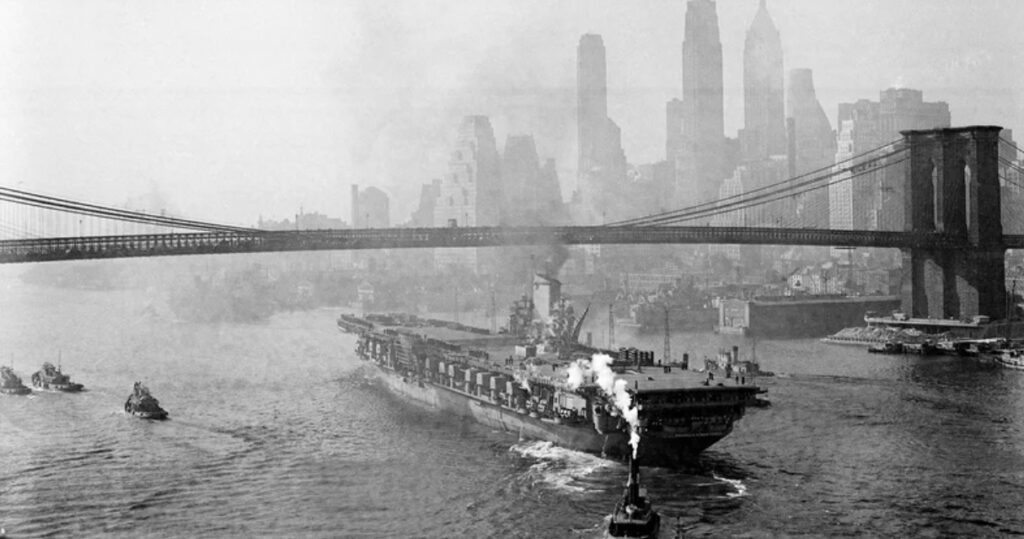

When the United States entered World War II in 1941, England was already struggling against the combined forces of Germany and Italy. German U-boats patrolled the Atlantic, threatening British naval dominance, while on land, the Nazis had conquered France and were preparing to invade the British Isles. The U.S. entry into the war drastically changed its course. Read about Brooklyn Navy Yard’s contributions to the Allied victory at brooklyn-yes.com.
The Start of World War II
Germany’s armed forces seized Austria in early 1938, shortly before forcing Czechoslovakia to capitulate. The Nazis invaded Poland in 1939, followed by the Netherlands in 1940.
For many Americans, still struggling with the effects of the Great Depression, the distant war held little interest—until the fall of France. The U.S. government, preoccupied with domestic unemployment and unrest, largely ignored the Nazi power grab until the growing threat to England became undeniable.
On September 3, 1939, fearing an invasion, Britain declared war on Germany. Confident in its naval superiority, the British sought to protect maritime routes, ensuring a steady flow of war supplies. This strategy proved effective—until German U-boats arrived in large numbers, sinking merchant ships and launching the Battle of the Atlantic. Although many American ships were lost, this naval conflict played a crucial role in the war’s outcome. German submarines infiltrated U.S. territorial waters, lurking off the coast to target outbound convoys carrying military equipment and supplies for the Allies. Soon, sunken ships lined the U.S. coast from New York to Florida.
Brooklyn Navy Yard’s Role
At the time, the United States was unprepared for war. The country quickly initiated a draft and began rebuilding its naval fleet. Brooklyn Navy Yard workers and military personnel made significant sacrifices to accelerate the path to victory.
By 1939, the light cruiser Helena (CL-50) and battleship North Carolina (BB-55) were still under construction. The dry docks were filled with destroyers undergoing repairs and upgrades, while the Labor Board was overwhelmed with applicants—painters, clerks, musicians, barbers, and tradesmen—all seeking jobs they could not find elsewhere. Most were hired and trained for specific wartime tasks.
In 1940, as war rumors spread, security at the shipyard tightened. Marines patrolled rooftops, and anti-aircraft guns were deployed. Signs reading “Loose Lips Sink Ships” appeared across the yard, warning workers to remain silent about their activities.
When North Carolina was commissioned in 1941, several shipyard supervisors traveled aboard the battleship for its initial sea trials. Though the U.S. had not yet entered the war, the captain took precautions, conducting most tests in the Caribbean.
On June 27, 1940, the keel was laid for one of the world’s largest battleships, USS Iowa (BB-61). Recognizing war was imminent, job seekers lined up outside the Labor Office at dawn. The shipyard operated around the clock in three shifts. By February 22, 1943, the 48,000-ton Iowa was commissioned, heading to the Pacific in early 1944 to battle Japanese forces.
The construction of USS Missouri (BB-63) began on January 6, 1941. It was launched three years later, on January 29, 1944. These ceremonies attracted massive crowds, but more than just battleships were being built—several aircraft carriers and numerous smaller vessels were also completed.
Work and Life at Brooklyn Navy Yard
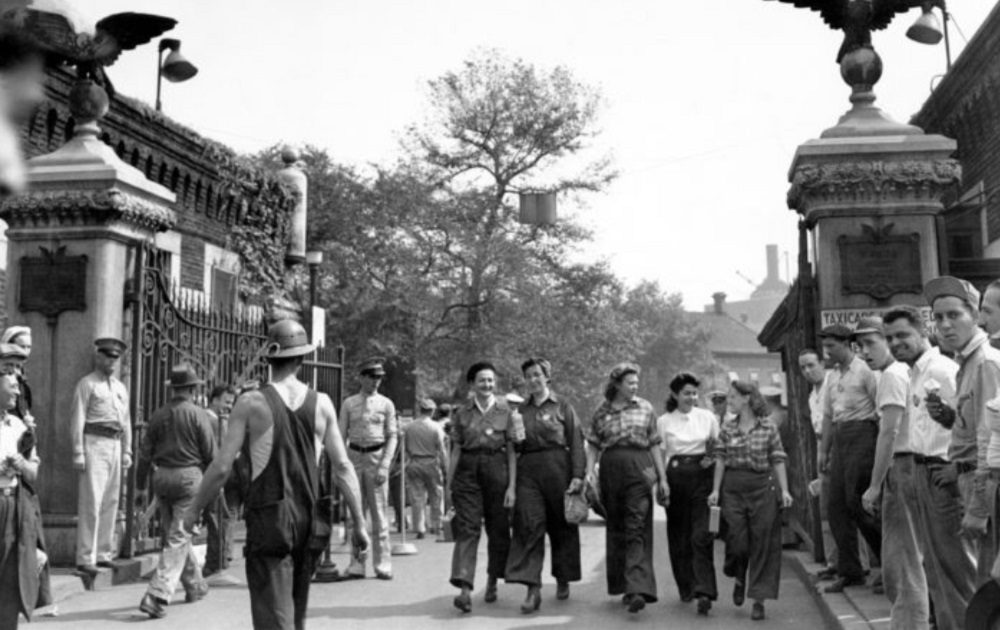
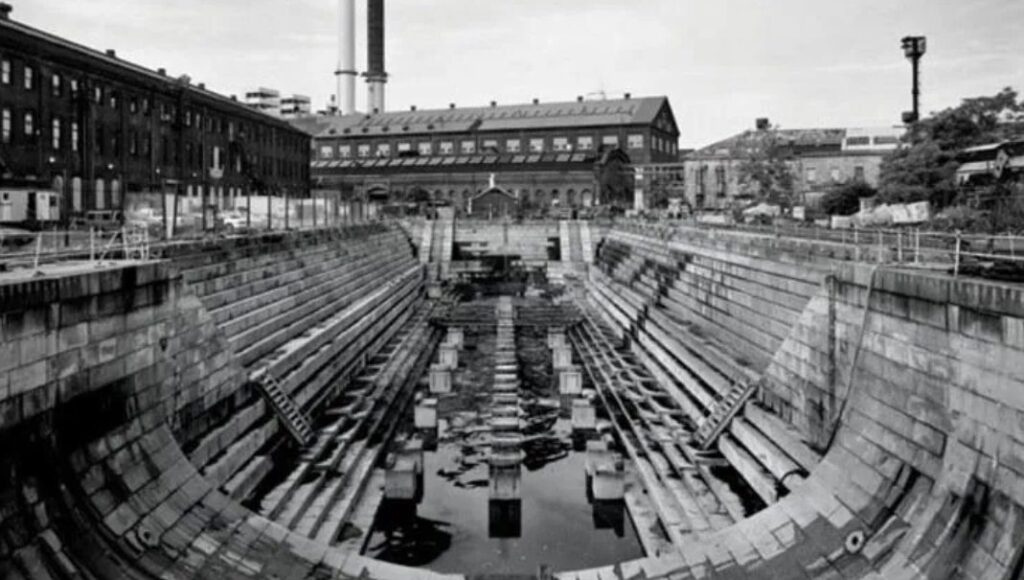
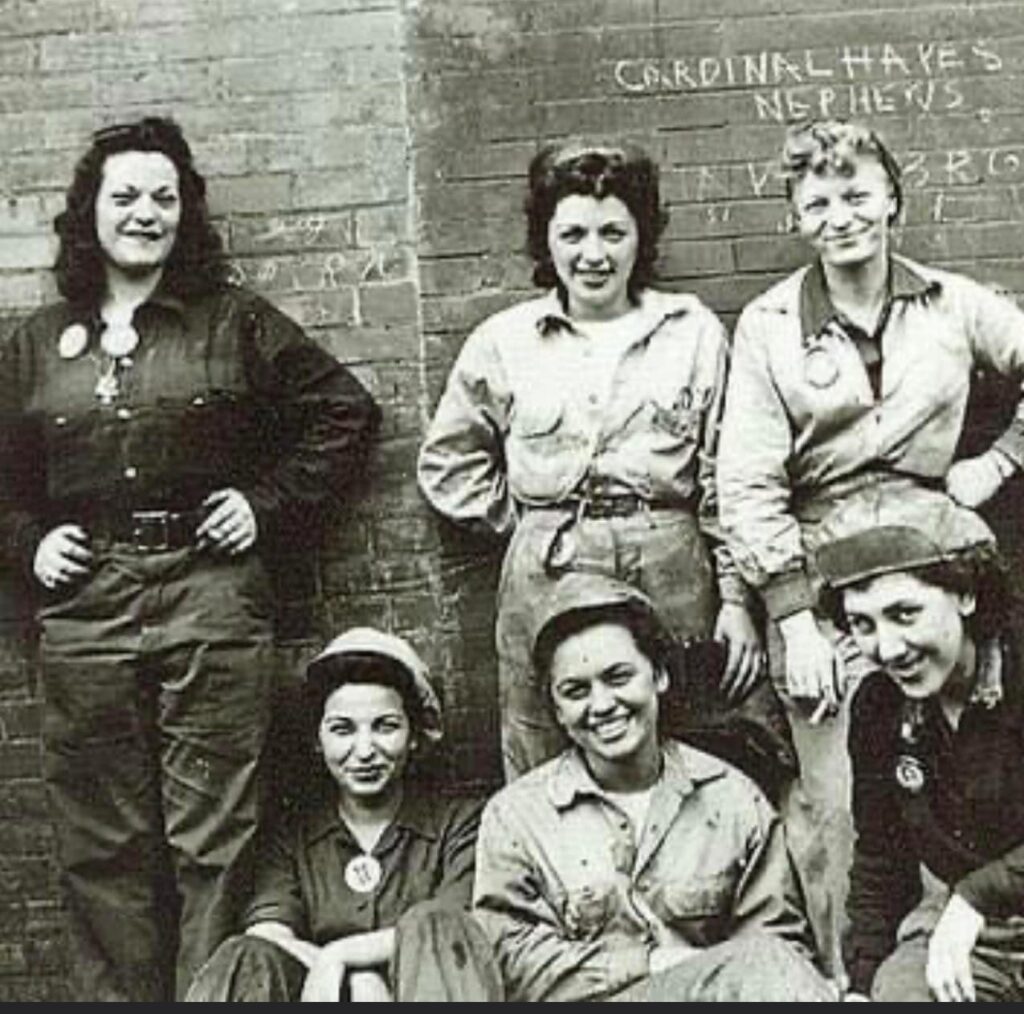
Meanwhile, U-boats continued attacking U.S. ships as they departed for foreign shores. Naval escort vessels worked tirelessly to protect convoys, but many were sunk or severely damaged. If a ship could be salvaged, it was brought to Brooklyn Navy Yard for repairs. At the peak of the war, Brooklyn Navy Yard was the largest shipyard in the world, employing 75,000 men and women. Its seven dry docks, two construction ways, and multiple piers were in constant use.
While awaiting repairs, hundreds of sailors roamed Brooklyn’s streets. Repairs could take weeks or months, depending on the damage. Some took the subway to New York City to visit the USO, others received free movie tickets at Times Square, and some visited lively venues near Sands Street, close to the Navy Yard’s main gates.
To boost morale, a lunchtime orchestra entertained shipyard workers and military personnel. The ensemble consisted of yard workers who had played in major New York orchestras. After long workdays, they rehearsed for next-day performances, which drew large crowds at Wall Street and outside the old Paramount Theatre.
As the war progressed, a training tank for divers was built. The 15-foot-deep tank trained divers to work at depths of 150 feet. Portholes allowed instructors to monitor divers’ progress. While a Navy lieutenant led diving drills, another specialist taught welding and cutting techniques.
The Diving Team
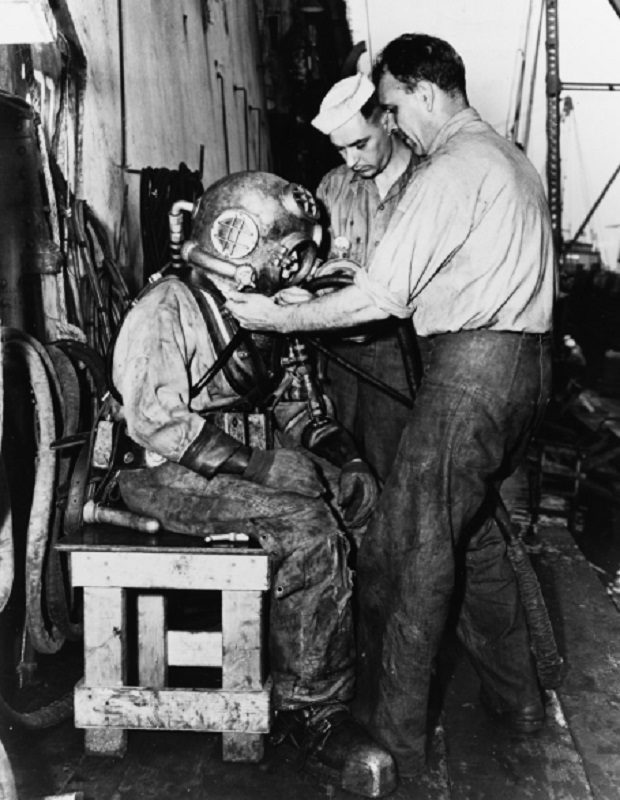
After completing tank training, divers moved to a diving barge for open-water training. In the murky depths of the river, strong currents and debris made the job even harder. Once they reached the riverbed, divers often encountered a major hazard—thick, glue-like mud. Visibility dropped to zero, and motion became impossible. Many divers panicked, losing their sense of direction and signaling for an emergency lift.
These were the harsh conditions in which Brooklyn Navy Yard divers trained and worked—day and night, aligned with convoy schedules. When underwater repairs weren’t needed, divers returned to regular shipyard tasks.
The work of these divers was nearly flawless, with only one near-fatal incident. While working on the battleship USS Arkansas (BB-33), a diver needed a break. As he surfaced, he drifted beneath a barge, becoming entangled in his hose and safety line. His air valve accidentally shut off, leaving him unable to restart the flow. Paralyzed, he was moments from suffocation—but his team pulled him out in time, saving his life.
By the war’s end, Brooklyn Navy Yard had built 18 warships, including three battleships, five aircraft carriers, two cruisers, and numerous landing ships. The total number of repaired ships reached into the hundreds.