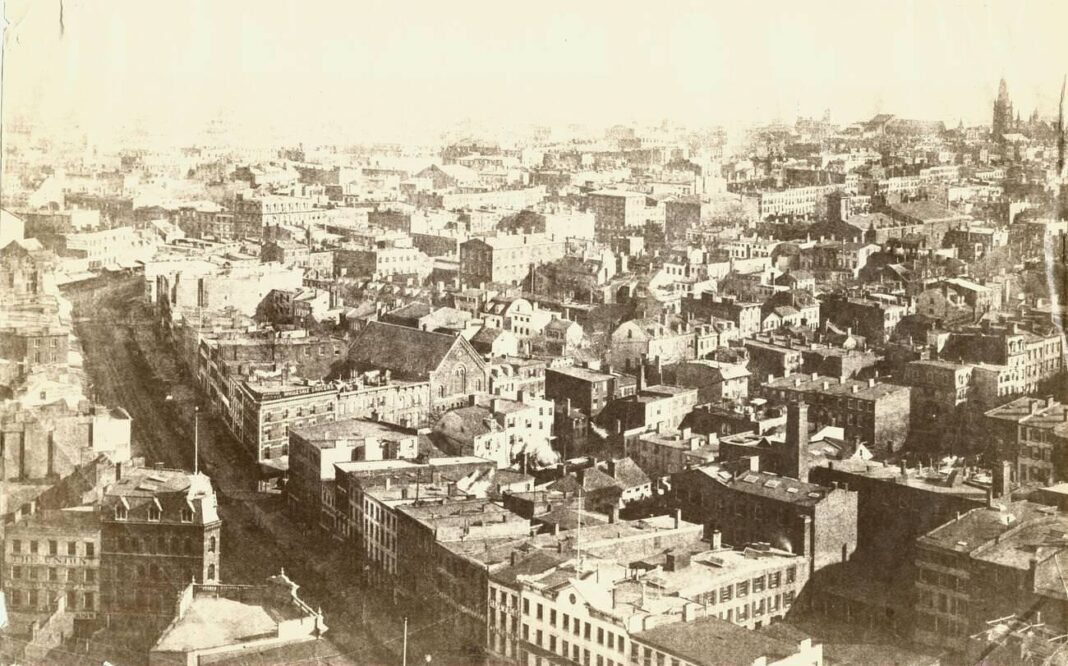

The Brooklyn Republicans placed Samuel Booth’s name at the top of their party ticket, signifying his nomination for the mayoral race. The Time newspaper of that era wrote that Mr. Booth, if elected, would make an excellent mayor. He possessed extensive experience in public office, years of financial management expertise, and more. All of this made him a strong contender capable of leading Brooklyn. His integrity was unquestionable; his life and reputation were untarnished. Read more about this at brooklyn-yes.com.
Rivals in the Mayoral Race

Although less recognized by the general public than the city’s incumbent, Mr. Booth had a large network of friends among the class of people who reliably vote and vote the straight ticket. Thus, while Democracy boldly proclaimed its ability to govern the city, the vast majority of those qualified to judge believed that Mr. Booth would run a strong campaign and give his electoral rivals significant trouble in substantiating their claims to the mayor’s seat.
The Democrats in that election were represented by Martin Kalbfleisch, who ran for the mayoral office. Martin Kalbfleisch had emigrated to the United States in 1826, initially selling paints before founding a chemical factory. He served as a Bushwick Town Supervisor and a Brooklyn Alderman. From 1862 to 1864, he held the position of Mayor of Brooklyn. Contemporary newspapers noted that during his tenure, expenditures were modest, and taxes were low. Although he voted against the Thirteenth Amendment to the Constitution—that is, against the abolition of slavery—tales of his honesty were legendary in the city; his integrity was a byword, earning him the nickname “Honest Old Dutchman,” a title he always seemed very proud of. He was extremely resolute in his intentions and opinions.
Kalbfleisch was married twice and left behind three sons and two daughters, all of whom married. His estate was valued at over $2,000,000. With the death of Mr. Martin Kalbfleisch, Brooklyn lost one of its finest sons, and the reform movement lost one of its most capable and dedicated advocates. Such a candidate was bound to pose serious competition for Booth in the 1865 election. He did, though he ultimately lost.
Moving to New York and Brooklyn
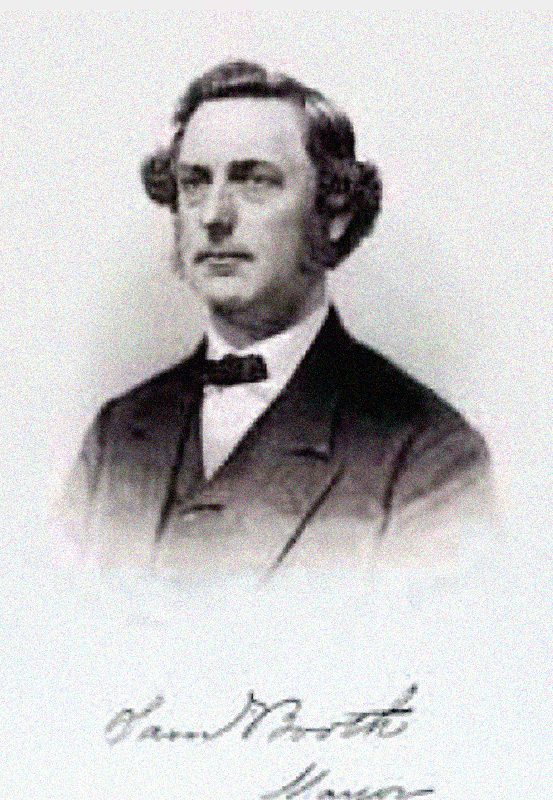
Speaking of the one who won that mayoral race, Samuel Booth was born in England on July 4, 1818—a joyous event for his parents, Thomas Booth and his wife, Rebecca. The Booth family emigrated to the United States when young Samuel was just a few weeks old. Upon arriving on the new continent, the couple and their infant settled in New York City, where they lived for the next decade or so. After that, the Booths chose to move to Brooklyn.
Samuel completed high school in Brooklyn. At the age of fourteen, he began working as a clerk for Thomas McLean on Maiden Lane, who owned a wholesale grocery store there. Just a few years later, at age sixteen, the young man decided to change professions and became an apprentice to local carpenter and builder Elias Combs. In the early 1840s, Samuel Booth went into business for himself.
He worked on the construction of private homes and commercial districts in Brooklyn, and his business thrived. As early as 1851, Booth was elected Alderman and Supervisor for the Fourth Ward as a Whig representative. After becoming a Supervisor, Samuel Booth stopped doing construction work himself and instead oversaw the quality of new buildings. He personally managed the construction of the county penitentiary building. His intervention was also necessary during the construction of the county courthouse. Booth declined re-election as Supervisor in 1855, but two years later, in 1857, he was re-elected to the post. Moreover, he was continuously re-elected until 1865. In addition, during this period, Samuel Booth served as a member of the Brooklyn Board of Education for a full two years. By early 1865, he was an active member of the Republican Party.
Elected Mayor

As we can see, by the time of the election, Samuel Booth had no shortage of experience working in various Brooklyn municipal positions. That is why the Republican Party decided to nominate him for Mayor in 1865. He won the election and became mayor, serving for two years.
He was a great help to volunteers and draftees and made many friends among the soldiers. He was diligent and responsible, performing his mayoral duties well, but he was often hindered by the majority of the Board of Aldermen. In 1869, Booth was appointed Postmaster. While this may not have been the zenith of a political career, Samuel Booth readily accepted the challenge and performed his work.
One other notable feature of Samuel Booth’s biography is that he never married or had children. He was also an active member of the Hanson Place Methodist Church and served as the superintendent of its Sunday school. Booth died at home on October 19, 1894, and was buried in Green-Wood Cemetery.