
The village of Breukelen was founded by the Dutch in 1646. Over the next few centuries, this small riverside settlement grew into the fourth-largest city in the country. The City of Brooklyn was incorporated in 1836, and many mayors served over the years. Until 1839, mayors were appointed by the Common Council for one-year terms and could be reappointed. In 1854, the office of mayor in Brooklyn became an elected position with a two-year term. This system remained until Brooklyn became part of the ‘Greater City of New York’ in 1898. This is the story of one of those appointed mayors, a man whom residents consider a person of great character—not just because he held office during turbulent times, but because he was an honest man with a deep desire to help his neighbors. Read the story of Brooklyn Mayor Francis B. Stryker at brooklyn-yes.com.
Dutch Roots
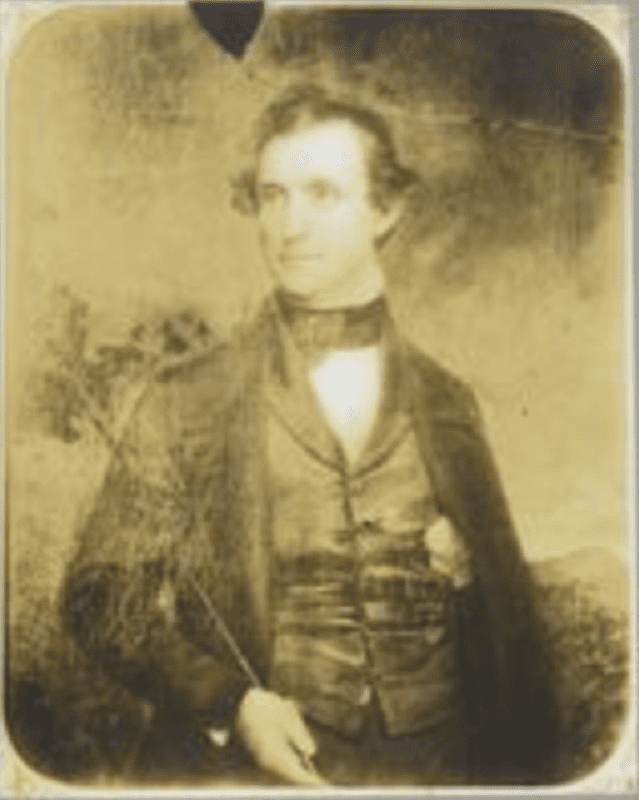
Francis B. Stryker was not a member of Brooklyn’s elite. He was not a wealthy merchant or a scion of one of the city’s leading families. Francis was born in 1811, when Brooklyn was still a village of fewer than 5,000 people. He was of Dutch descent, but his father was not one of the successful large-scale farmers whose names now adorn the borough’s street signs. Burdett Stryker was a butcher with a stall at the beginning of James Street. When construction on the Brooklyn Bridge began, the plot where his stall stood was taken to create the bridge’s approach.
Young Francis was educated in local schools, receiving his highest level of education at Erasmus Hall in Flatbush. At fourteen, he became an apprentice to a carpenter whose business was on Poplar Street, between Henry and Hicks. The young man completed his apprenticeship and worked as a journeyman carpenter until 1836, eventually opening his own shop at 96 Cranberry Street. Although his father was a Democrat, young Francis became a Whig, and in 1838, the party nominated him for the position of one of three tax collectors in the newly formed City of Brooklyn. Francis B. Stryker was elected by the community.
His new duties didn’t take him away from his carpentry business, but in 1840, he was elected Sheriff of Kings County. Since the sheriff’s term was three years, he had to leave his trade behind. After his term ended, Francis returned to carpentry, earning about $1.50 a day. But his party members felt the young man was destined for more and nominated him for mayor in 1846. Francis Stryker skillfully defeated the incumbent Democratic mayor, Thomas G. Talmadge, by a margin of over one thousand votes. He won again in the next election, becoming mayor for a second time in 1848. By then, Brooklyn’s population exceeded 75,000 and was growing rapidly.
The City’s First Great Park
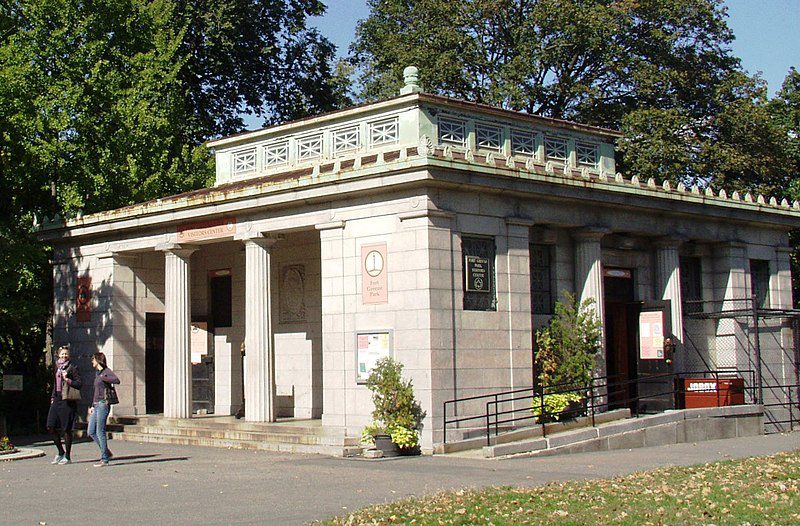
It was during Stryker’s tenure that Fort Greene Park, then called Washington Park, was opened to the public. It was the city’s first great park and held the remains of American prisoners of war who died on British prison ships in Wallabout Bay during the Revolutionary War. But Francis Stryker demonstrated his true leadership and humanitarian spirit during his second term in 1848.
That winter, a cholera epidemic broke out on Hudson Avenue, near Tillary Street. The disease was brought by sick Irish immigrants who had disembarked and settled there. For the next two years, cholera devastated the First, Second, Fifth, and Sixth Wards. Mayor Stryker, accompanied by one of his marshals, Steath Dawson, went against all medical advice and entered the wards to care for the afflicted. In those days, the Board of Aldermen and the mayor were technically responsible for public health, but they weren’t actually required to do anything substantial in that capacity, typically handling less dangerous or dirty issues. Stryker appointed himself the de facto commissioner of health and went out among the people. He used his own money to buy supplies and medicine, visiting the sick every day to do whatever he could.
More Than a Mayor
Another point of note: when Stryker was mayor, Brooklyn did not have a formal police department. The Board of Aldermen appointed city marshals who served as law enforcement. Mayor Stryker made it his duty to review cases with his marshals every Sunday, meeting at the mayor’s office on the corner of Cranberry and Henry Streets. Through this practice, he became interested in a case where a man was sentenced to be hanged for a double murder. The defense argued it was self-defense, and Stryker did everything he could to get the governor to pardon him. He did not succeed, but he managed to have the sentence commuted to prison and, thirty years later, was able to secure a full pardon for the man.
In 1849, he was nominated by the Whigs for the office of County Clerk. Being extremely popular at the time, Stryker won easily. His term lasted three years, during which he leveraged his popularity in business dealings and soon greatly improved his financial standing.
Toward the end of his term, the Republican Party was just beginning, and many Whigs, including Stryker, joined the new organization. He was the first Republican candidate for Mayor of Brooklyn in 1856 but lost to the Democrat, Samuel S. Powell. After this, Francis Stryker returned to private life before being appointed Superintendent of the Sewer Department, a position he held until 1875.
In that year, for the first time in his life, Francis Stryker was unemployed. He had never married and had no family other than his brother, Burdett. He had earned a considerable fortune over the years but had made many unrecoverable loans to friends in need and had co-signed for loans for people who then defaulted.
He spent most of his time at the offices of the Cole’s Auction House on Fulton Street, where property and goods were auctioned daily. There, he kept a desk, drafted wills and other legal documents for clients, and acted as a notary public—his only source of income. Though he was not a professional lawyer, it was said that none of his documents were ever overturned in court.
An Honest and Simple Man
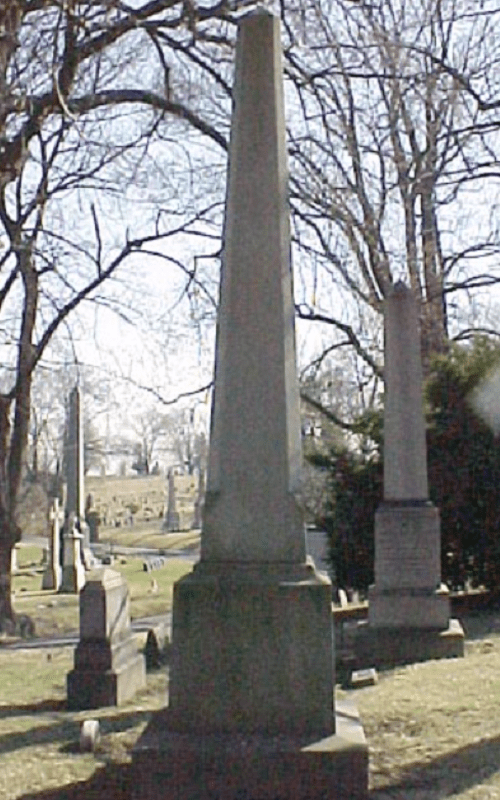
Shortly before his death, Francis Stryker told the *Brooklyn Eagle* a story about burying a man who had died of smallpox. The man had no friends or family, and no one wanted to enter his home to retrieve the body. Stryker and a friend went in, collected the body, and arranged for a hearse and a funeral at a cemetery plot, for which he paid. They were the only mourners. He also maintained two large plots at The Evergreens Cemetery for friends and strangers who had no one to bury them or were too poor to afford a resting place. All of those plots were filled over the years, long before his own death.
On January 14, 1892, Francis B. Stryker passed away at his home at 260 Jay Street. He was living there with the widow of his only brother, Burdett, who had died several years prior. He was 81 years old. That day, Brooklyn’s flags were flown at half-staff in his honor, and he was buried in a plot he had reserved for himself at Green-Wood Cemetery. He wanted to be remembered as an honest and simple man who cared more for his fellow citizens than for personal glory. Today, two small streets in Gravesend bear the Stryker name: Stryker Street and Stryker Court.