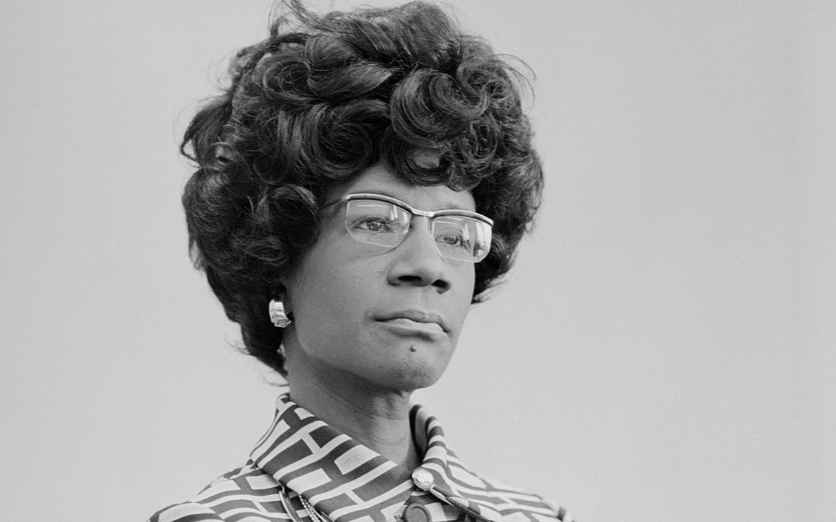

The political history of the USA is rich in interesting and fateful events for millions of people. They include scandals, murders and pre-election races, which were followed by the whole country. One of the most striking political events that greatly influenced the lives of Americans and African Americans was the nomination of an African American woman as a candidate for the post of US President. Shirley Chisholm entered the history of the country and her hometown as a great politician, the first Black woman in the US Congress and a person who was not afraid to be herself. Read more on our website brooklyn-yes.com.
The burden of stereotypes
Shirley Anita St. Hill was born in Brooklyn in 1924. Charles and Ruby were immigrants from Guyana and Barbados and had four daughters. Shirley was the oldest one. In those days, life was not easy for Black Brooklynites. Father worked hard at a factory and mother was a seamstress. When the Great Depression hit in the 1930s, the St. Hill family faced job discrimination. They were struggling to survive.
As for Shirley, she was strong-willed with a solid character from an early childhood. Her mother characterized her eldest daughter as a rebel. In her youth, Shirley was a real bully. She was not shy about solving problems and convincing people using fists.
The girl received her basic education at Brooklyn Girls’ High School and continued her studies at Brooklyn College. The main subject was sociology. Shirley was a diligent student. The rebel inside her turned into a sharp-minded and tenacious person. Teachers encouraged her to pursue a political career. However, Shirley did not dare to enter politics because of the challenging life. During her studies, she faced double discrimination. It was very difficult for a black woman at that time. They were not taken seriously, only as housewives.
Due to the stereotypical influence of society, Shirley worked as a kindergarten teacher after school. Still, she continued to study and entered Columbia University.
The husband as a support
After university, Shirley married private detective Conrad Chisholm and took her husband’s surname. He supported his wife in all her endeavors and social life. Together, they gradually became an important part of society. Conrad often said that the influence of his wife’s willpower was so strong that it passed to him. He felt taller, stronger and braver next to her.
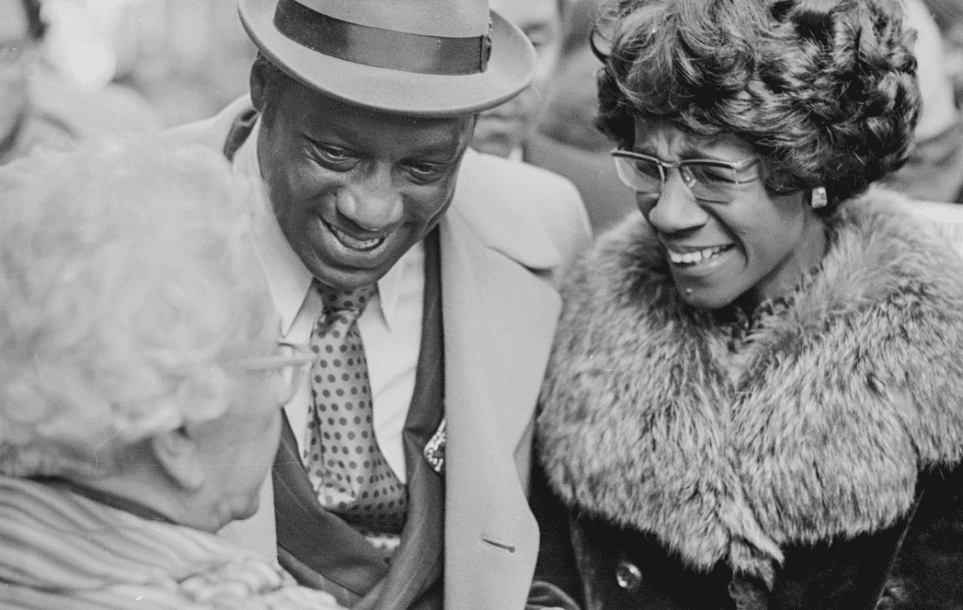
Shirley managed to successfully work in several areas simultaneously. While her civil position was just beginning to build up, Shirley had already had a very successful career in education. She headed the Hamilton-Madison Child Care Center in 1954 and consulted for the New York City’s Bureau of Child Welfare. Despite a successful and promising career, Chisholm was even more interested in the world of politics. In 1964, she became a representative of the Brooklyn district in the New York State Assembly. Then her political career began and turned the world of patriarchal American politics upside down.
Big game
In 1968, Shirley for the first time ran for the US Congress from the 12th congressional district, which included Brooklyn. She became the first Black woman to take this step. It was a true battle of the legends. Chisholm’s opponent was James Farmer, a human rights activist and fighter for racial equality. Chisholm was still very green in politics, unlike Farmer, who was familiar to many politicians and even the NYC mayor.
For Chisholm, politics was a totally new world where her gender was a more valid reason for discrimination than the color of her skin. Male politicians and journalists did not care about it. However, the fact that she was a woman outraged them.
Still, this did not scare Shirley. On the contrary, it only fueled her desire to go on. Her campaign differed from others because Shirley found an approach to each voter. Brooklyn is a multinational borough. A huge number of representatives of different nationalities live there. In addition to communicating in a foreign language, Shirley conducted her campaign practically on the streets for working-class people like her.
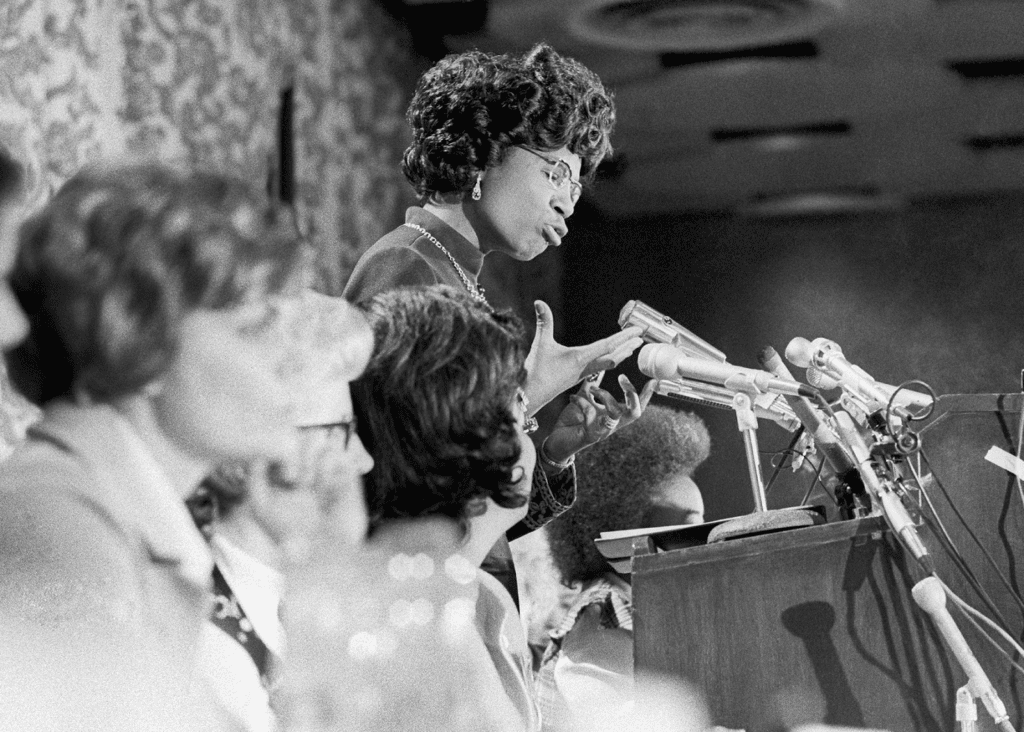
Shirley Chisholm became the voice of African American women and they, in turn, became her support and helped her to win.
Her success became a sign that everything is possible. For Shirley, reality swept away all the sweet dreams. She was assigned to the House Agriculture Committee. The new position was completely useless for her struggle. Shirley took such an appointment as a mockery. However, her perseverance helped her move to the committee, where she was useful.
The way to the White House
In 1972, Chisholm shocked everyone with her decision to run for the US presidency. President Nixon’s policy prompted her to make such a decision. Shirley was convinced that his policies would only inflame and aggravate the relationships between North and South, Black and White people. Chisholm fought for equal rights and for the absence of discrimination based on skin color.
It was really a great step for all African Americans, as well as for American feminists. Before Chisholm, no woman had dared to do such a thing. In the new struggle, Shirley faced another problem. That was the lack of adequate support from feminists. Chisholm’s political decision revealed another problem of the American community. It appeared that the views of White and Black activists were very different.
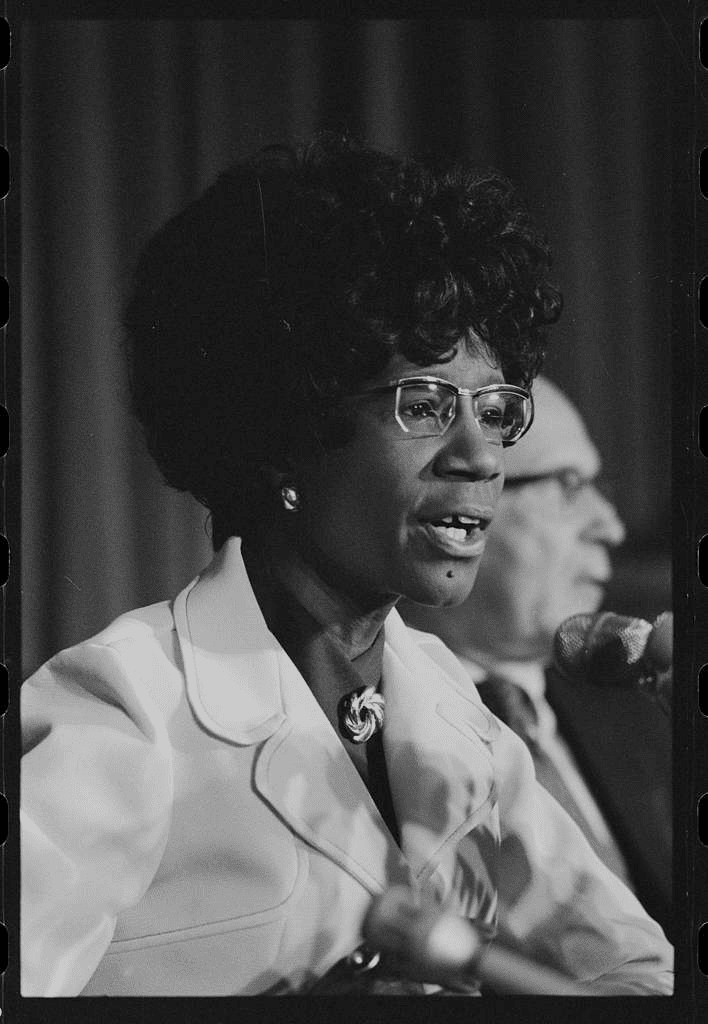
Difficulties attacked Chisholm from all sides. If the lack of understanding with White activists was expected, the disapproval of African Americans was somewhat unhoped-for. They did not want a woman as the President, no matter what the color of her skin was. Thus, Chisholm realized that patriarchal principles are also inherent in Black men. It was unusual for her. After all, her husband has never been humiliated by such an active position.
Opponents and journalists attributed different goals to Shirley. They told she was a Black candidate or that she was a women’s candidate. Chisholm herself had always said that she was the candidate of the American people. Gender or skin color was not important to her.
King’s ghost
Two years before Chisholm’s election campaign, Martin Luther King, the voice of Black America, was assassinated. He believed he was being hunted by the Ku Klux Klan. After this tragedy, many believed that any black politician and public figure would suffer the same fate. However, Shirley was not afraid. Her main slogans included only two words, namely incorruptible and unruly. These were not just words. She was a solid locomotive of truth and honor.
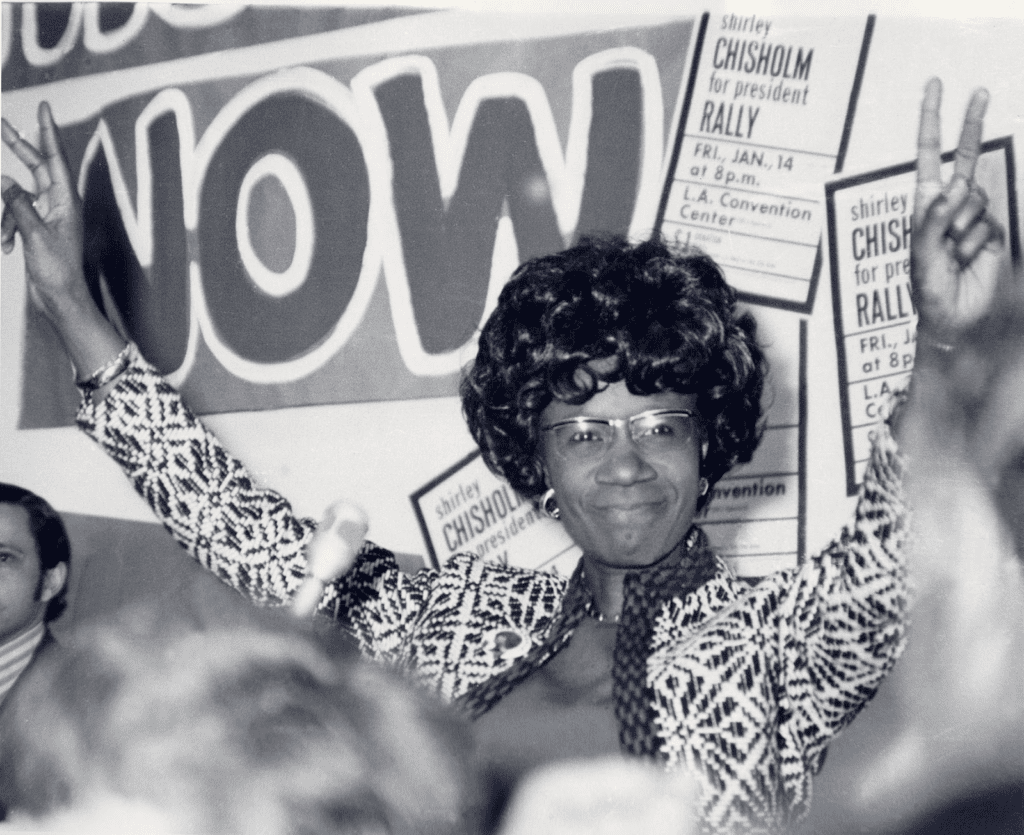
Despite all her willpower and toughness, Chisholm was a smart woman and perfectly understood that she would not become the President of the United States. She began her campaign knowing that there would be no victory. However, she never dreamed of the White House. She was much more interested in making America’s old political system tremble at her voice.
Three other male Democratic candidates were running against Shirley. They had 1729 delegates against her 152.
She did not win. Still, Shirley Chisholm did something more important. She showed that anyone can run for the presidency.
Life after politics
When the campaign was over, Chisholm returned to work in the US Congress. Her main goals were the fight for women’s reproductive rights and criticism of the war in Vietnam. Shirley raised hot topics and revealed the most acute problems, showing everyone that a just and equal society is still a long way off.
No matter what difficulties she faced, she was re-elected to Congress seven times. In 1982, she retired and devoted herself to her second husband. She left politics but she did not change her active position. In 1984, she helped organize the National Congress of Black Women. President Bill Clinton nominated Shirley to be US Ambassador to Jamaica.
Shirley Chisholm died three years before Barack Obama became the US President. Her career stirred up the world of politics and led to the destruction of barriers. Not bought and not sold. This phrase is all about Shirley and is written on her crypt in Buffalo.